
BBC Radio 4 Extra to close, and other BBC services axed
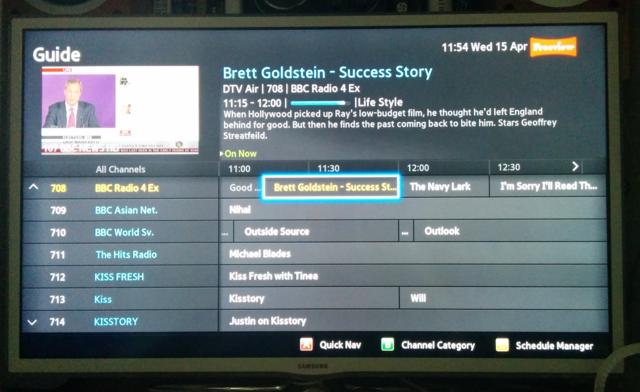
The BBC has announced, as part of its cuts, the closure of BBC Radio 4 Extra (which is mainly an archive station, playing reruns of BBC Radio 4 comedy, drama and documentary programmes from some years ago). “Some programmes” will be available on BBC Sounds, but one eye-catching change is that The Daily Service will be “on BBC Sounds and BBC Local Radio”. The Daily Service, a religious service that is mainly pre-recorded these days, was first carried on the BBC since 1928, being shunted to longwave only in 1991. In 2024, with the end of a specific longwave schedule, it shifted to BBC Radio 4 Extra. I can only assume that its current slot, 9.45am to 10.00am, won’t be the slot used on BBC local radio. While 46% of the UK identify as Christian, only 6% are actually practising, so it would be a strange move to broadcast something that could be a tune-out for 94% of the audience at one of the highest point of radio listening. My bet is that this mostly-unloved-but-tradition-think-of-the-tradition piece of broadcasting moves to 5.45am, and outcry ensues.
The closure of BBC Radio 4 Extra is an odd one, since I can’t quite see how much money it would actually save. A contributor to the Radio Times calls it a terrible mistake, highlighting the benefit of linear radio. But, more to the point - the closure of the radio station will save virtually nothing. It is wholly broadcast in places the BBC already owns - its own DAB multiplex, its own satellite space, and streaming - so there are little savings to be made there. Repeat payments for the programmes can’t, surely, be that much to make a meaningful saving. It has continuity announcements, but those are pre-recorded by existing staff. A small amount of programme costs; a few staff - what else is there to actually save? Has anyone done the maths?
(If you’ve not heard BBC Radio 4 Extra, here’s Jake Yapp performing, live, a taste of the station. Alternatively, the podcast version of this has the opening of BBC Radio 4 Extra if you’d not heard it.)
Mind, the ever-resourceful Boom Radio noticed an opportunity for a press release, and said that it would quite like the DAB spectrum vacated by BBC Radio 4 Extra, and would pay market rate for it. You’ve got to hand it to them!
The BBC is also stopping running a 24-hour radio newsroom for the BBC World Service in London, for the first time in its history. The overnight bulletins, which are also taken on BBC Radio 2, Radio 4 and BBC Radio 5 Live, as well as BBC Local Radio, will come from a new operation in Sydney, Australia. I got hold of the full email announcement. To be honest, for the BBC World Service, I think it’s fine.
Meanwhile in the UK, the government has announced a “Be Ready” campaign, urging people in the UK to stockpile food, water and other essentials, as well as to buy a wind-up radio. Much of UK radio has already exited AM, so hardy Brits will have to find a wind-up FM or DAB receiver from somewhere. I must confess to not knowing quite how hardy the DAB network is during times of emergency, though I hear that comparisons between DAB and the FM network are not that favourable in terms of resiliency.

Classifieds
- Supercharge your radio show with world-class prep: the right show prep delivered to you on time, EVERY day, without fail. Grab a £1 week-long trial of Show Prep and stop chasing round looking for things to use on your show, running out of time before the show, and trying to sight-read the newspapers!
A strange thing happened last week: I was sent a recording of a radio show I did more than thirty years ago. Obviously, I’ve posted it online, never having had any recording of any show I’ve done on the radio (I didn’t record a single one). It’s not a “usual” show - it was a stand-in, and I’d have been off the air for over four months: and the station I was on had radically changed since I was there. But there’s plenty that I’m quite proud of: and plenty that I’m kicking myself for, especially for not prepping properly. Perhaps that’s why I was never asked back: although during my two years as a full-time presenter, and five years as a swing presenter, I never once got any feedback from any of my programme directors, so never once knew what I was doing wrong. Anyway, you can go and listen here. And if you run a station with a need for a slightly more prepped, slightly less shouty version of what you hear there, I’ve a home studio, an advantageous timezone for voicetracking, and would like feedback…
In my main job, I interviewed a man called Myke Hurley. At the end of the interview, I told him that I used to occasionally employ a great voiceover called Mike Hurley. Myke hadn’t heard of Mike - and so I discovered this rather lovely 1994 mini-documentary showing Mike Hurley, the celebrated voiceover. The world has changed, rather: no more voiceovers driving the length and breadth of the UK any more (they all connect via the internet).
The UK’s classical commercial station Classic FM has launched a Christmas spinoff - Classic FM Christmas. Clever idea, and one that, surely, is more interesting than any number of stations playing the same 50 tedious christmas tunes.
Last time, I highlighted the big difference in the US between listeners who support the two major political parties: noting that Republicans seem to listen to the radio much longer than Democrats. A wise man points out that Republican voters are older than Democrat voters, and radio listening, particularly in the US, skews much older.
In Brisbane Australia, where I am, it’s been raining quite a lot. An ABC reporter helped save a man from drowning in his vehicle. It made for quite the story, as you might expect. Satirical news website the Betoota Advocate titled the story Morayfield Bloke Gets Great Value For His 4 Cents A Day After Being Saved From Floodwaters By ABC Reporter, which is about right. “With Queenslanders serviced by less and less local commercial media - and instead forcefed news from Sydney and Melbourne - it is no surprise that the first bloke on the scene was wearing the national broadcaster’s wavelength symbol on his lanyard.”
I know nothing about Radio Marie-José, but apparently it was an AM service in Belgium. Here’s a post from 2018 showing, what I’m assuming, is the AM transmitter’s control room - now derelict. Impressive-looking.
Talking of which, would anyone like this nice traditional office in Glasgow? It’s the former home of Radio Clyde - the only radio station I’m aware of that owned its own swimming pool, oddly absent from the photographs, but there on the floor plan.
Where I am speaking next
- Somewhere exciting, mid-November, Sweden (remote)
- Radiodays Europe, Palma, Mallorca (Mar 14-16)
- Radiodays North America, early May, Toronto Canada
- Somewhere exciting, early June, USA
- Somewhere exciting, early August, USA
- Radiodays Asia, late August, Taiwan
Supporters
Thank you to the supporters below, plus Dafydd Furnham, Marty from New Yawk, Gavin Watson, Greg Strassell, Sam Phelps, Richard Hilton, Emma Gibbs, Jocelyn Abbey and James Masterton for being regular supporters.
If you’d like to support my work in any way, you can BuyMeACoffee - become a member to give regularly or just give a one-off coffee, or five. Here’s where to do that.
There’s a podcast version of this newsletter if you prefer that. I’m on Mastodon as @james@bne.social if you’re there too. And my website has more detail about who I am, and what I do, and whether I can help you further.
My newsletter is supported by:
Selected bits from Radioland are in RadioInfo in Australia, and RAIN News in the US
Lesen Sie außerdem ausgewählte Artikel auf Deutsch in Radioszene