
The trouble with David Jones - and what it says about radio
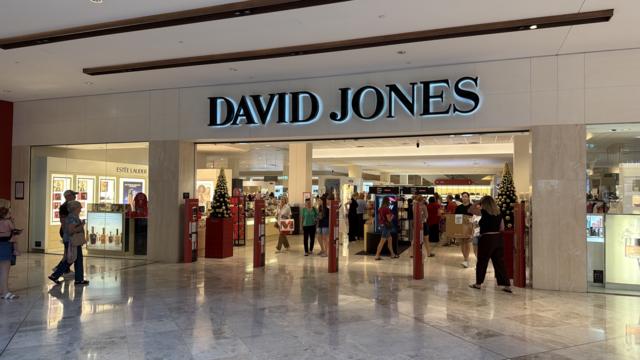
Above: the David Jones store in Chermside, Brisbane.
David Jones, a premium department store chain in Australia, was placed under administration last week. The 188 year-old retailer, with 6,000 employees, will close many of its stores - potentially almost all of the stores in out-of-town shopping malls. Out of the 38 stores it runs, it’s likely to keep just twelve. They’re the biggest stores in the shopping malls they operate - mainly in Westfield shopping centres; so it’ll make quite the dent in those places, as well.
In ten years, I think I went to David Jones a couple of times. Once about eight years ago to buy a set of cast iron cooking pans; and once this year, because David Jones had sent me a $10 voucher with no minimum spend for my birthday. I ended up buying a jar of honey for $12.50. The honey was nice enough. But I couldn’t work out why it made any sense to go there.
The thing about David Jones is that it just sold other peoples’ stuff. I can buy any of the brands inside a David Jones in those brands’ own stores, probably in the same shopping mall; and probably cheaper, too. There was literally nothing that you needed to visit David Jones for any more: especially with the internet just a click away. This wasn’t the case thirty years ago. It’s most certainly the case now.
Apart from, perhaps, the people. At its best, I’m told that David Jones had knowledgeable, clever local people who were great at understanding what shoppers want, and would give good advice about something you were trying to buy. They’d become well-known to the shoppers, and recognised in the store every day. The people, the articles say, were the reason that shoppers came to David Jones. Like Laudie Sneddon, who worked for the company for fifteen years “helping customers”. They offer significant additional value - though perhaps not value that’s easy to see on spreadsheets. But, people cost money; and so, cost-cutting means that they’ve gone. When I last visited, like many large department stores David Jones felt deserted. Trying to find someone to pay - let alone to ask questions - was difficult, in a large, deserted, store, just running on automatic.
David Jones seemed to have forgotten what made it unique.
At this point, you’re probably wondering why I’m writing about an Australian department store, and what on earth this has to do with radio.
The thing about music radio is that it just plays other peoples’ stuff. I can listen to any of the songs played on the radio on Spotify or other music services, on my own schedule. There’s not much that you need to listen to the radio for, especially with the internet just a click away. This wasn’t the case thirty years ago. It’s most certainly the case now.
Apart, from, perhaps, the people. At its best, radio stations have knowledgeable, clever local people on the air who are great at understanding what listeners want. They’d be well-known to listeners, and recognised wherever they went. Those people, the presenters, are the reason that listeners come to music radio. They offer significant additional value - though perhaps not value that’s easy to see on spreadsheets. But, people cost money; and so, cost-cutting means that they’ve gone. Listen to many music radio stations during much of the day or night, and it’s non-stop music: a radio station that feels deserted, just running on automatic.
It seems to me that, for some stations, we may have forgotten what makes radio unique.
I’m often asked what the future of radio is. I suspect that we can learn a lot from an ailing department store.

Classifieds
- Supercharge your radio show with world-class prep: the right show prep delivered to you on time, EVERY day, without fail. Grab a £1 week-long trial of Show Prep and stop chasing round looking for things to use on your show, running out of time before the show, and trying to sight-read the newspapers!
Fred Jacobs is to step down as President of Jacobs Media at the end of the year, after 43 years. Widely credited as the architect of the classic rock format, he’s always been an inspiring and supportive person. He’s certainly got quite the stamina, too. Jacobs Media author the Techsurvey, which is a great piece of research for learning what radio listeners think - and they’ll continue doing that. I wish Fred, and Paul who succeeds him, the very best.
AM deathwatch: All remaining BBC Local Radio stations across England will leave AM by the end of the year. That’s BBC Radio Somerset, Gloucestershire, Derby, Norfolk and Cumbria. Here’s a list of stations available on AM - even I hadn’t realised how almost deserted the band is these days, but it looks as though there’s almost nothing left, excepting 5 Live and TalkSport playing a game of chicken to see who turns off first.
In Switzerland, the Swiss public service broadcaster is to turn its FM transmitters back on again from mid-November. A decision was made last year by politicians to stop the FM switchoff: originally FM transmissions were due to cease at the end of this year. SRG/SRF/RTS/RSI had already switched off its FM transmissions.
In the Netherlands, big changes to local public service broadcasting. As of January 2028, the number of local public broadcasters will fall from more than 220 to just 80. At least 50% of output (between 7am-11pm) will need to be local programming: produced by, and relating to, the broadcast area. The new rules say that non-stop music doesn’t count as local programming (even if you add local jingles), nor does national news. I was thinking that this sounded very difficult: but then, I remembered Alfred 107.3 in Shaftesbury, which would easily comply. Repeating output is just fine, of course.
Nielsen published Q3/26 US audio listening trends. “US consumers spend nearly four hours a day (3 hours and 55 minutes) with audio. That time is spread across more platforms and devices than ever, yet the core of the ad-supported audio day has barely moved. 83% of all daily ad-supported audio time goes to radio and podcasts, while only 15% goes to streaming music services.” The US focuses more on ad-supported numbers these days - Pierre Bouvard is the clever man to thank for this - but it doesn’t tell the whole story from the point of view of audio consumption behaviour: only 22% of Spotify usage is ad-supported (says Edison Research’s Share of Ear).
In Canada, Radio Connects released “More than meets the ear”, comparing what industry professionals think consumption is, with what actually happens. “Industry professionals” - probably ad-buyers - are Not Like You And Me, and underestimate the amount of radio listened-to. They also significantly over-estimate podcasting. Again, this report leans heavily on “ad-supported audio”, but is a worthy exercise, and gives some nice numbers.
Tunerva looks nice. It’s an entirely-browser-based internet radio player. It’ll even work on your television apparently. And in your Tesla.
Last week, I said that Channel 9’s tower was the one not being used on Mount Coot-tha. In fact, it’s Channel 7’s. Thank you to Radioland reader Spencer (who sent pictures as proof), and Radioland reader Darren, among the people who’ve told me. If you live in the area, you might want to read Brisbane Council’s Mount Coot-Tha vision - page 54 contains detail about reuse of the television stations. It suggests retaining the towers as landmarks; potential museums of broadcasting (no thank you); and “adaptive reuse supporting a mix of community, cultural, educational, recreational, tourism and wellbeing outcomes”. There’s a survey to complete, too.
Where I am speaking next
- Somewhere exciting, mid-November, Sweden (remote)
- Radiodays Europe, Palma, Mallorca (Mar 14-16)
- Radiodays North America, early May, Toronto Canada
- Somewhere exciting, early June, USA
- Somewhere exciting, early August, USA
- Radiodays Asia, late August, Taiwan
Supporters
Thank you to the supporters below, plus Dafydd Furnham, Marty from New Yawk, Gavin Watson, Greg Strassell, Sam Phelps, Richard Hilton, Emma Gibbs, Jocelyn Abbey and James Masterton for being regular supporters.
If you’d like to support my work in any way, you can BuyMeACoffee - become a member to give regularly or just give a one-off coffee, or five. Here’s where to do that. Or, you can now leave me a voicemail!
There’s a podcast version of this newsletter if you prefer that. I’m on Mastodon as @james@bne.social if you’re there too. And my website has more detail about who I am, and what I do, and whether I can help you further.
My newsletter is supported by:
Selected bits from Radioland are in RadioInfo in Australia, and RAIN News in the US
Lesen Sie außerdem ausgewählte Artikel auf Deutsch in Radioszene